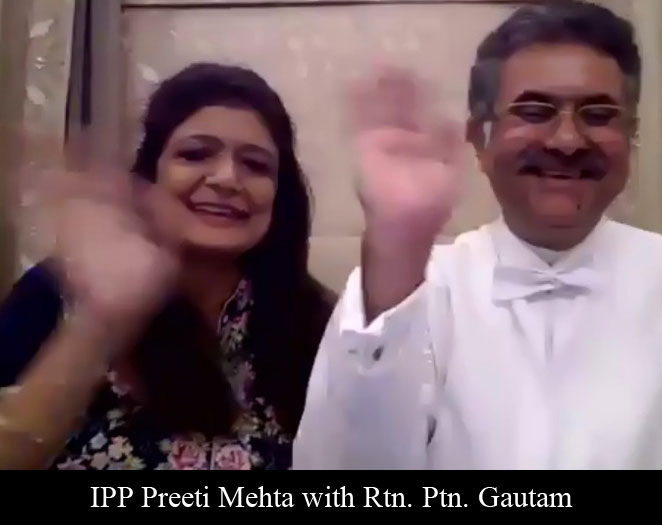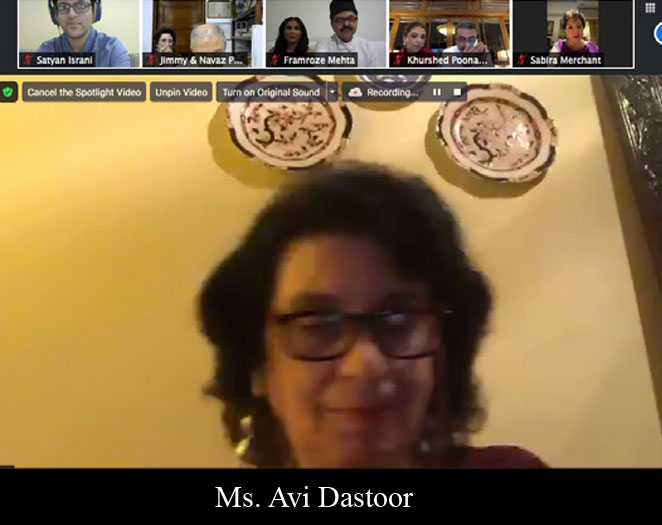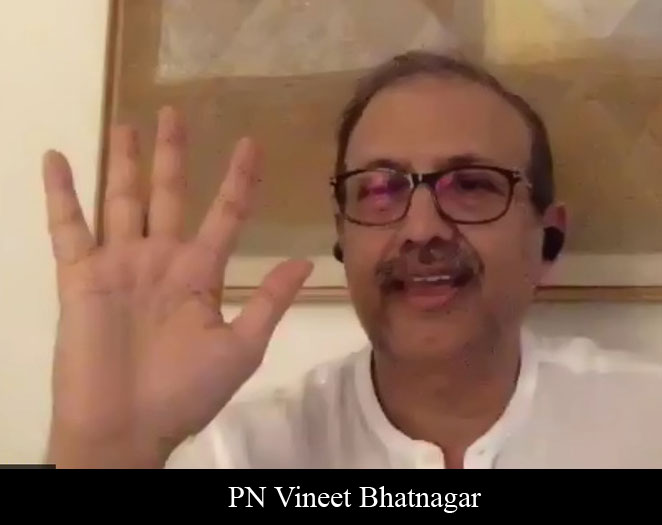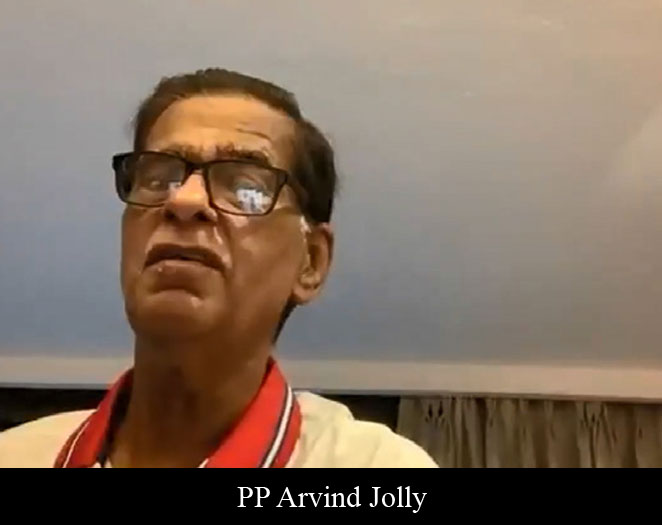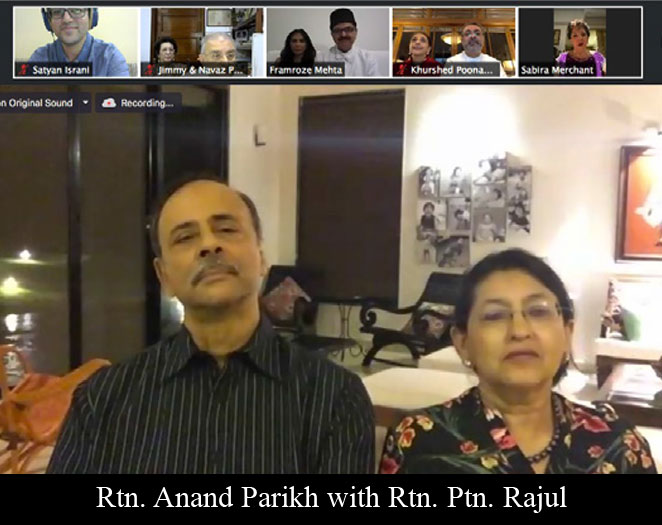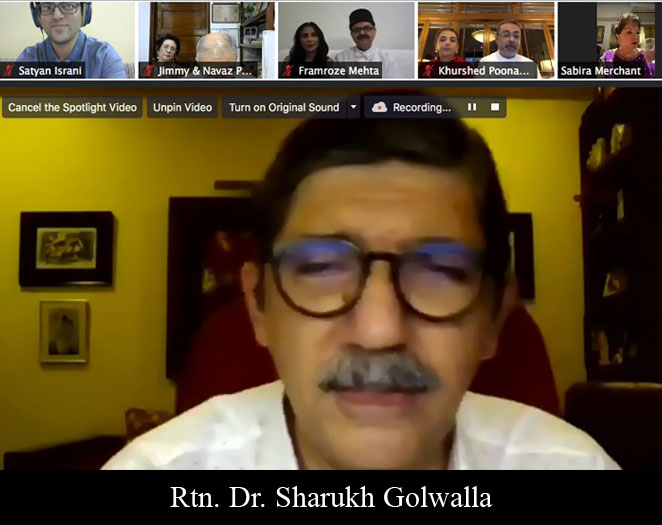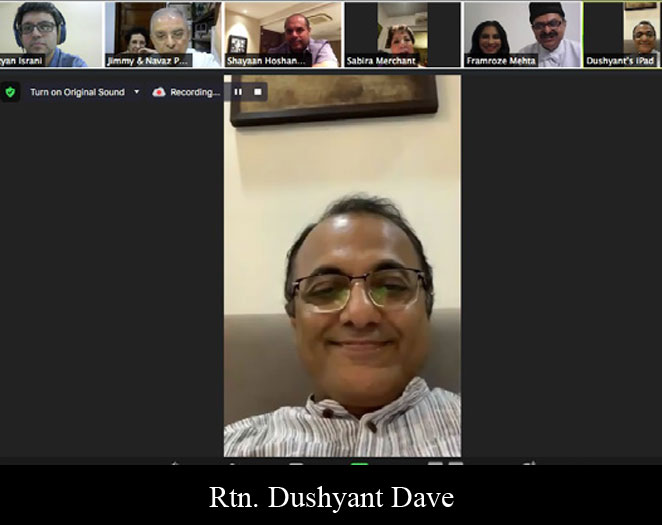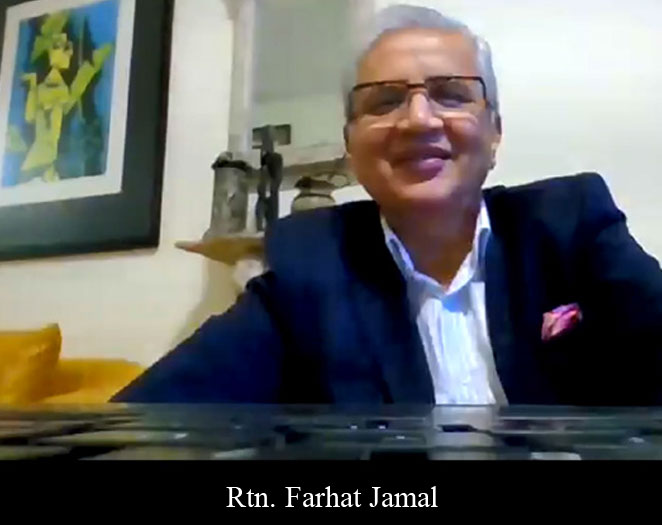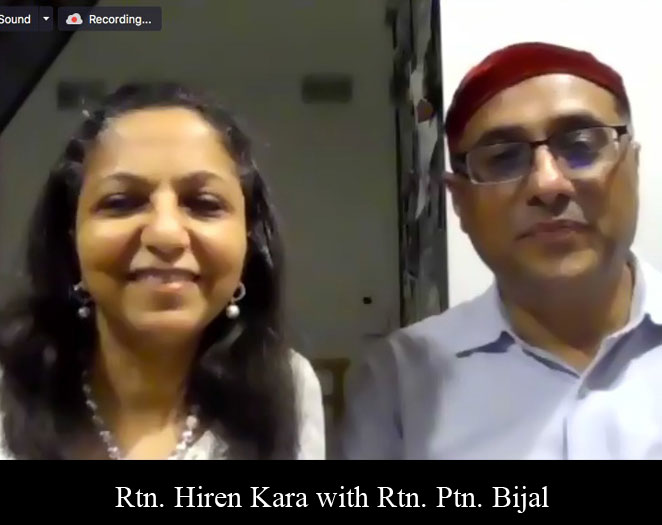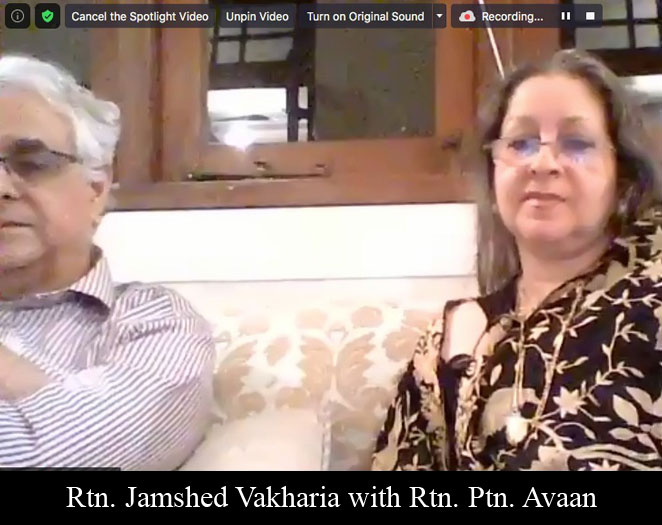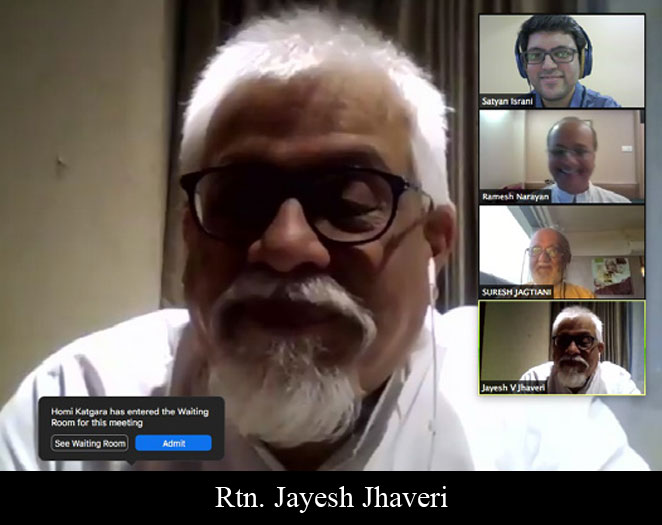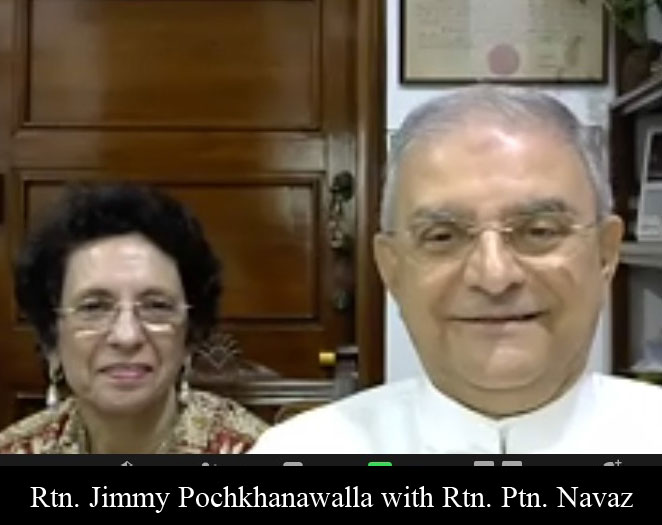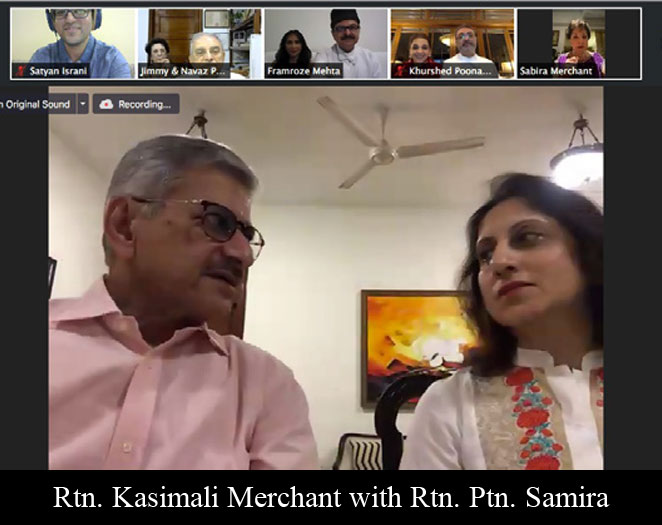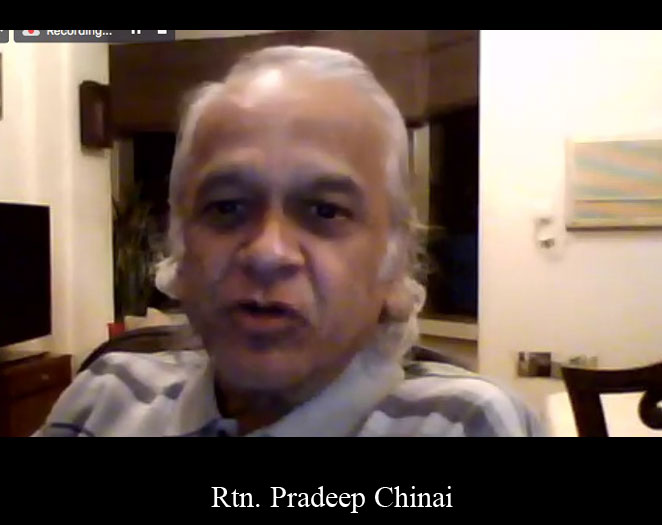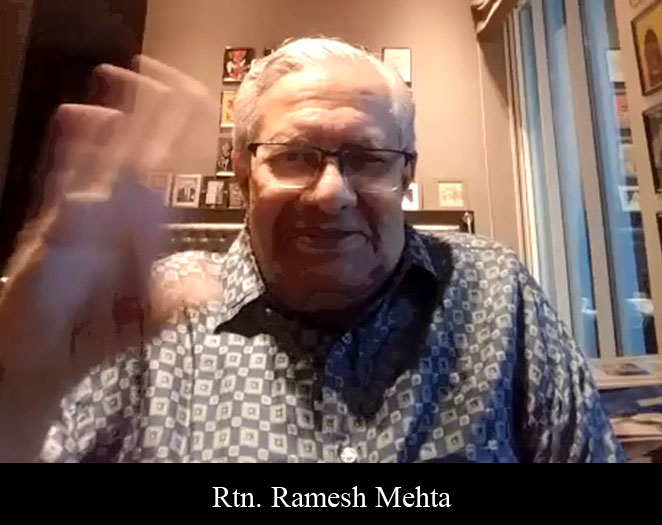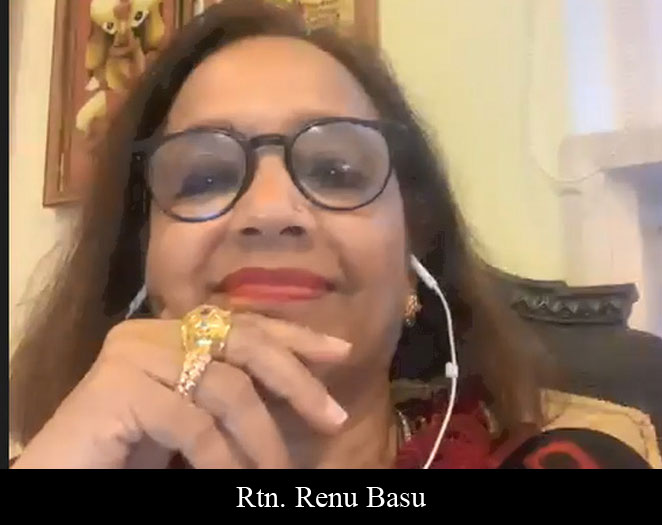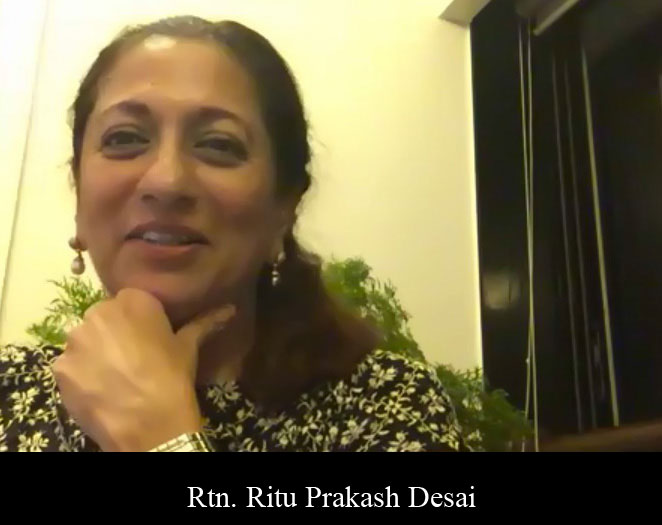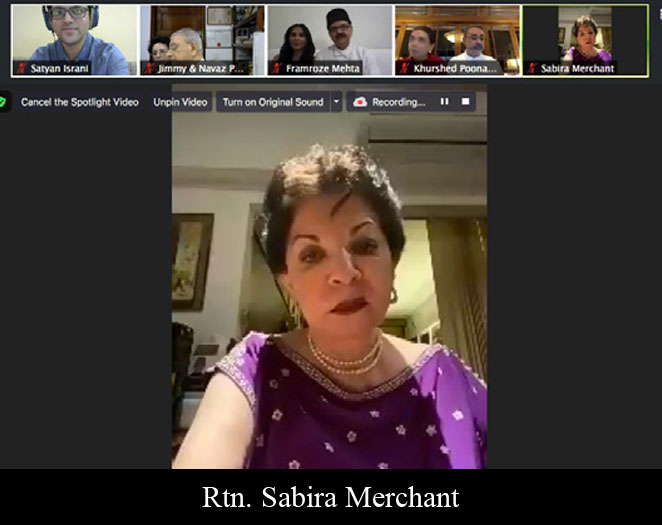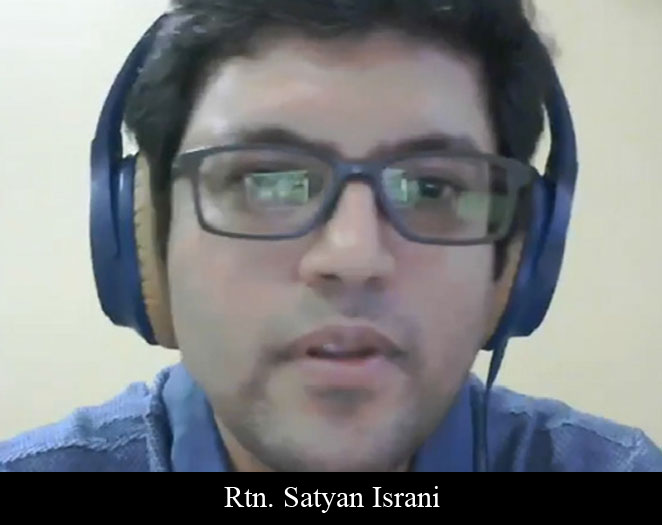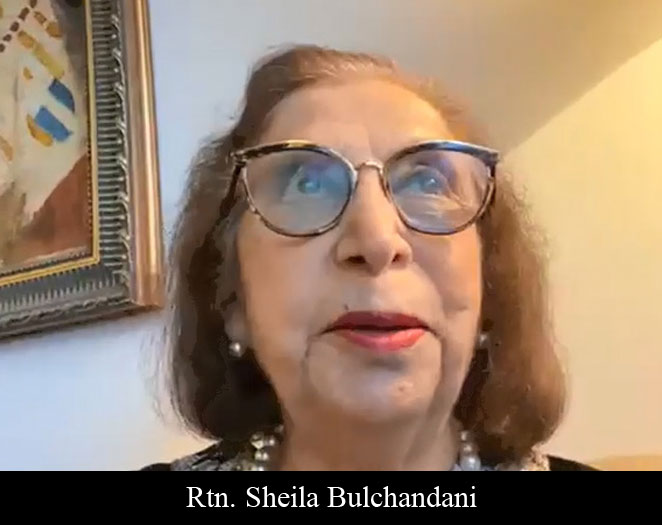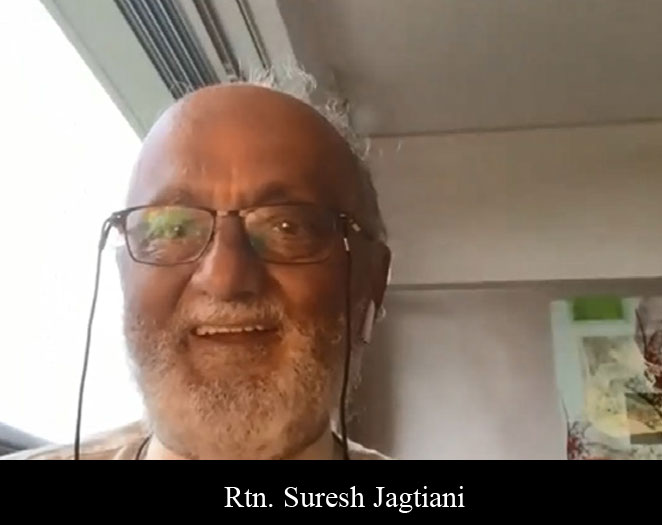

With the spirit of Elvis in the house, Rotarians celebrate PARSI NEW YEAR
“PARSIPAANU” BY RTN. JIMMY POCHKHANAWALA
In order to understand what Parsi stands for, it is necessary to harp back to our most ancient of monoethical religions – Zoroastrianism. Our prophet was Spitama Zarathustra. He was the first prophet to preach that there is universal one God and God is said to have revealed Zarathustra, the simplest truth of the world namely, that the universe consists of two competing forces, the force of goodness and the force of evil. The force of right and righteousness or the force of darkness. Therefor Zarathustra preached that it is You, Zoroastrians alone, who can seek the light and can be rewarded by Ahura Mazda, that is, there is one God in heaven, and it is up to you alone to choose the path of heaven or be condemn to reside forever with Ahriman (evil spirit) Our entire liturgical prayers revolve around this single theme and I choose to describe our very first prayer and the shortest, it is called the Ashem Vohu. It is written the ancient Avestan language and translates this way: Righteousness (To think a good thought, to speak a good word, to do a good deed) is the best good (that any human can do) good and it is happiness. Happiness is to him/her who is righteous for the sake of the best righteousness.
THE LEAD MOTIVE THAT RUNS THROUGH OUR PRAYERS, KNOWN TO MOST OF YOU; MANASHNI GAVASHNI, KUNASHNI OR HUMATA, HUKHTA, HVARSHTA TRANSLATED AS GOOD THOUGHTS, GOOD WORDS, GOOD DEED. THAT IS ALL THAT IS THERE IN THE ZOROASTRIAN PRAYERS. EVERYTHING ELSE REVOLVES AROUND IT.
leaving all our quirks and idiosyncrasies, leaving aside our profanity, deep down the Parsi from his birth is groomed to be virtuous. What sets us apart, in my respectful submission, is our capacity to assimilate, our friendliness, our broad and progressive way of thinking, our some what western standards, our love for good food and good wine. These are all part of folklore and I need not go further. But, what are the characteristics of a true Parsi? Charity, Professionalism, Excellence in Business and Service to Society. Generally, you will find that all things being equal most people gravitate to the Parsi lawyer or the Parsi accountant and especially the Parsi doctor. Most people agree that t po the Parsi way of doing business – value for money, you buy good products and if you are not well, well, then the Parsi family is producing the vaccines for you – the Poonawala family in Poona.
Now we come to some of our idiosyncrasies. I have no hesitation to say that if something is wrong, a Parsi will invariably not tolerate.
It is said that to right even a perceived wrong, the last Parsi left on earth will look into the mirror and fight with himself. As far as possible, doing what is right not consciously causes harm or grief to another, solid honesty, zest for life and goodwill towards all. These are the traits of the Parsi-panu and I respectfully submit that these characteristics endear us most to our non-Parsi friends.
So now enough seriousness, here comes the real secret of our Parsis. Our distinctiveness is manifested best in our idiomatic and colourful language. Having migrated to Surat from Sanjan, where we landed from Iran, we became pakka Surati Parsis and Surati Parsis cannot speak a sentence without embellishing it with some idiom or the other that is often off colour, as an example, if a Parsi lawyer has his name plate, Jimmy Pochkhanawala, Bar at Law, I guarantee you that a Parsi friend will scribble beneath, ‘toh andar ketlo?’
People say that all Parsis got ahead in life during the British Raj because they sucked up to the Brits. Nothing of that sort. We pretended to suck up out of Brits and made monkeys out of them. The Brits believed that we were their chosen ones. Example: a Britisher asked a Hindu gentlemen, ‘You, Mr. Hindu, what is your favourite flower?’ the Hindu answered, ‘The sunflower, it reminds us of Arunachand’ and the Brit said, ‘Ah! I wipe my backside with sunflower.’ The Brit asked asked a Muslim gentleman responded the same way. He finally came to a Parsi, ‘You Parsi, what is your favourite flower?’ and the Parsi dripping with sarcastic supplication said, ‘Cactus flower your Lordship!’ and continues in Gujarati, ‘ave tari g*nd poshine batav ni’.
The important thing to remember is that this is not restricted to a small pocket or bad year or a high quality or low quality Parsi. This is universal Parsi language whosoever you maybe from the Lord side to the under on the street. This is the way a Parsi is and I will give you a concrete example on this. Legend goes that Sir Jamshedji Jeejeebhoy once invited a world famous Parsi violinist to his home, Mazagaon Castle for dinner. There were other high society guests as well. After dinner, the violinist obliged and entertained the audience with a few pieces. When he finished Sir Jamshedji who had a smattering of knowledge of the violin grabbed the Violin and said, ‘ave hu vagaruch’ and the notes he produced were such cacophony that the family down began to howl. Sir Jamshedji grabbed that violin, that multi-million-dollar violin from its neck and said, ‘chup maadar****’ and the entire audience laughed at a damn good time.
Now we have certain words, the non-Parsi friends might not be familiar with these words but all Parsis are; when someone talks rubbish, the Parsi simple says, ‘fui ni g**d’ or ‘gathlo’. The listener understands immediately that he is talking nonsense and he should shut up. Now you can’t look for the explanation or the connection as to why you refer to the father-sisters posterior when you are describing this but that is the way the Parsi speaks. Sometimes it can be taken to a laughable and ridiculous extent. One Nowruz evening, a well-known Parsi doctor of yesteryear enacted the play Hamlet in Gujarti. The play was auto-driven and when Hamlet’s father came on stage and said, ‘Hamlet, hoon tara baap no bhoot’ somebody from the audience shouted, ‘ne hoon tari maa’. The play ended there because the audience couldn’t stop laughing. If someone spills ink on an antique table. The Parsi is not going to say, ‘oh khodai’ the Parsi will say, ‘avi saras table ni kone mai behen kari naki’ and the message will go. When a Parsi had a battle with his lady neighbour, the Parsi gloated that he won without uttering a single word. He said in gujarati, ‘apre toh Surati vakil ubho kari didho’ while tying his lehenga’s nada.
AS FAR AS POSSIBLE, DOING WHAT IS RIGHT NOT CONSCIOUSLY CAUSES HARM OR GRIEF TO ANOTHER, SOLID HONESTY, ZEST FOR LIFE AND GOODWILL TOWARDS ALL. THESE ARE THE TRAITS OF THE PARSI-PANU AND I RESPECTFULLY SUBMIT THAT THESE CHARACTERISTICS ENDEAR US MOST TO OUR NON-PARSI FRIENDS.
We Parsi associate anatomical parts with real Parsi names therefore Behram is the posterior, Machesar means a female’s frontal endowments and Temur means a male’s endowment. In a matrimonial dispute in the Bombay HC during the British days, the lady’s letters to her lover were being read out in court and all those letters ended with loving endearments to her darling Temur. The British judge thundered suddenly, who is this Temur? And why is he not a co-respondent? Both side lawyers had to approach the bench and whisper, my lord, in Parsi Gujarati, Temur is a euphemism for the male organ. The British judge collapsed.
Our MCs and BCs our GCs, are never meant to hurt, absolutely never. They are only for what we call, Badam pista embellishments to our talks. We take these expressions in our stride, no offence meant and no offence taken. Our unique words and phrases are sometimes untranslatable. Example: in the firm where I signed my articles, we had a Parsi panchayat as client, Lady Jehangir was the chairperson and letters had to be addressed to her starting with Maiji, Maiji. One such letter was a letter from a lady who wrote, ‘hoon ek haram harkela, akkha kharus Parsi ne lachar baai cheu.’ The partners could not translate haram harkela, akkha kharus Parsi. But all of us knew exactly who is a haram harkela, akkha kharus Parsi. You may say good for nothing, but that is just not enough.
So I will conclude by wishing you much joy, happiness and safety in these times and the next year. As we Parsis say, ‘hasta ramta dara jaaye ani je rare eni behen******’