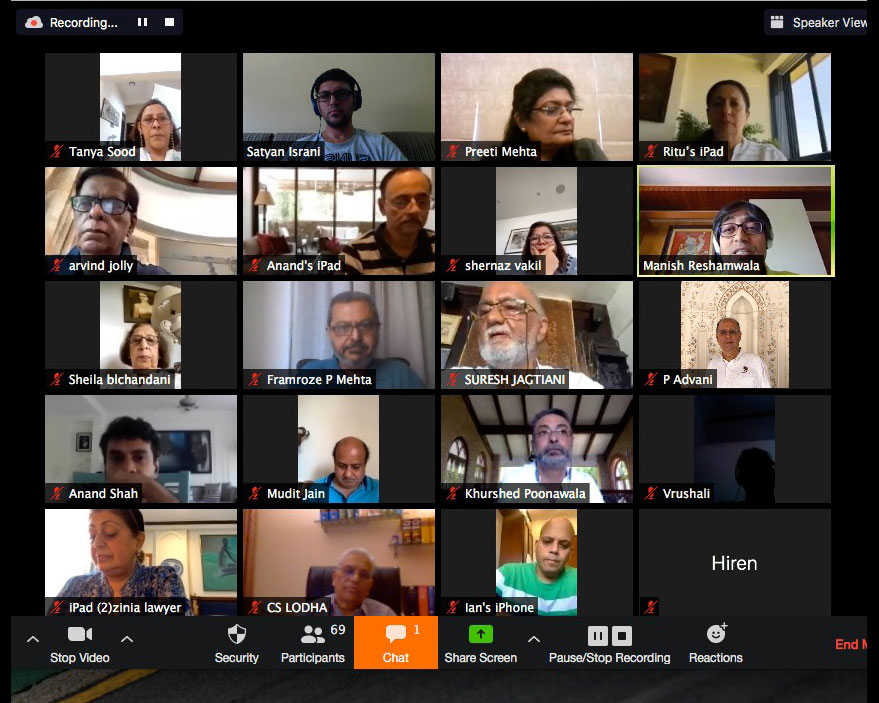

Future-Proofing Businesses
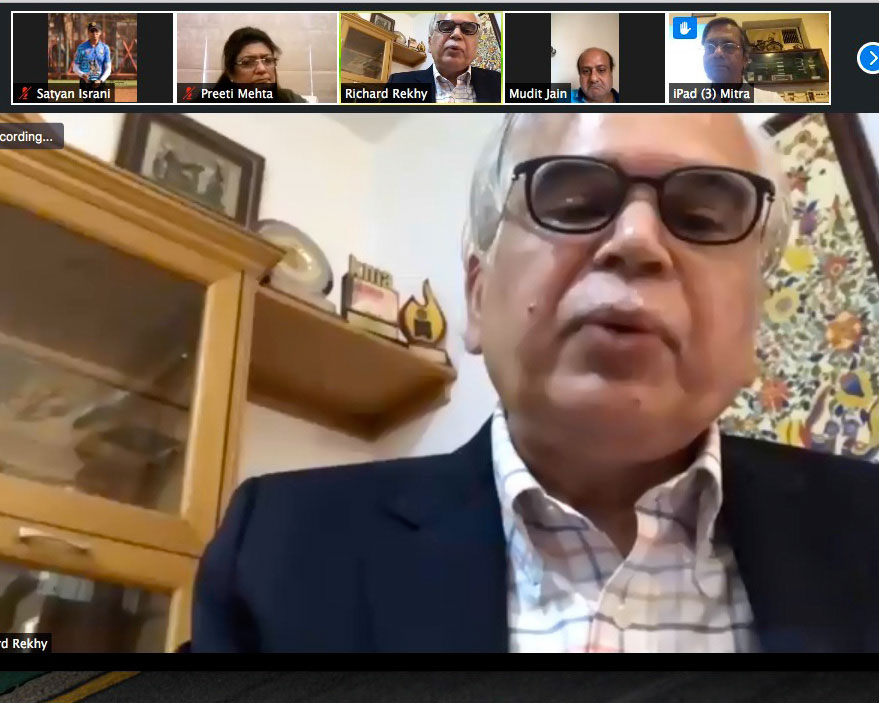
RICHARD REKHY talks about business continuity and how to reinvent the future
Planet Earth is closed. The global economic impact has been tremendous. There are four to five impacts of Covid-19. First, is Covid itself. Second is the oil crisis that hit us immediately on the back of Covid-19. Third is the health impact due to the lockdown both mental and physical. Then there is the economic impact: more people should not die out of economic issues rather than Covid-19 itself. That is a big dilemma that governments are facing. Lastly is the social impact. There are enough people – migrants in India – who have been moving around.
A study carried out by Oxford says that in the Asia-Pacific region, India’s GDP has been hit harder than China. On the positive side, while we have a dual impact of Covid-19, India is probably among the few countries which is still in the green zone. From that point of view and with the feeling developing against China, we be ready to take on companies which want to move out. And we should be agile quick to get them to invest here.
However, business continuity is not about crisis management. Some of you might have a crisis management team coordinating matters daily but crisis management deals with the issue now. Business continuity is a strategy and it is not a quick fix that we can put together.
A lot of experts are saying that the coronavirus will come back in winter. It will be anytime from between 18 months to two years till we find a vaccine. Once we find the vaccine, it will become like any other virus. But issues of this kind will impact the world, going forward. So, the strategy for business continuity must be well documented by companies who are putting their teams in place.
Everything must be documented so that when it comes back, you do not need to recreate it. This happened suddenly – people did not get time to react and everyone did what they could in the circumstances. Going forward, you may not need to know what kind of crisis is going to hit you, but you can deal with the outcomes and for that you need to be prepared. The very fundamentals of your business are challenged: what are you going to do? People are unavailable, you are unable to manufacture in your current factories, your product or service suddenly becomes outdated, there is a liquidity crunch, there are no vendors available, you are not right up there as far as technology is concerned. And, also, companies which are more technologically savvy are dealing with the situation better.
What is our response going to be? The first thing is impact assessment; how is Covid-19 impacting your business? This is like a 360° view of the situation. The second is business continuity. Normally, we have a rigid way of reacting to situations. We need to throw rigidity out and look at new ways to react. Communication will be important; innovation is going to be prime and you will need to reinvent yourself to grow. How will you take advantage of it? There is going to be loss: at least one quarter is gone, it may be more. The entire sales business is choked.
Re-imagine cost. It is just not about kicking your budget but to reimagine cost with the white paper; do I really need this? Smart groups and companies have looked at every single cost line, renegotiated every single contract however minor.
Never have alliances been as important as today. New alliances are going to come in with partners you never thought about. Leadership is being challenged like never before. It is a test of character and empathy is going to play a big part. Clarity of thinking and working collaboratively with teams because there could be latent talent which could be upgraded and upskilled to do something different.
Health and safety of employees. We will have to ensure that we create because there is a lot of consciousness developed in the people about health and safety, so we need to think about how we deal with it. Also, how will you ensure employee engagement? The world is moving towards forced entrepreneurship so we need to keep our employees engaged.
Finally, what should we be doing now?
First, be human. Reach out to customers and employees and listen with empathy. Take time to connect with peers, get down with employees. It is time to take a deep breath and not be reactive. Look at the big budgeted expenses, especially advertising and marketing. Are they really needed in today’s time and how much are they needed? It is not that you must cut everything but see what is needed. Relook at all the contracts, there could be short-term suspensions, rents – do you need to pay if you do not occupy the space, can they give you remissions? In Dubai, for example, a lot of businesses have given remission. They are not charging rents for a quarter.
Then you need to have two teams: one looking at your current business and second looking at new businesses and opportunities. As soon as Covid-19 is over, people are going to come back to work in some meaningful way. You cannot be struggling at that time and you need to be ready for opportunities because it is going to be the first move advantage.
Next, look at your corporate plan and strategy. Scenario planning is going to be important. How do you plan different scenarios, because anything can happen, and you need to be ready. These are uncertain times and there are too many variables. Look at that as a leader or promoter of your company. Rework your cash position, working capital, do you have enough limits available? How much cash will you need to survive? Conserve cash, that is why you need to reimagine cost. Start with zero base budgeting.
Many of us would have heard it but nobody has done it. We need to build our budget from ground up and not look at the last few years because the last few years will not be representative of what the next few years will look like. It will have to be a new look where the business people will have to be involved in the budget and not just finance people. So, it may have to be led by business more than finance this time. There are going to be changes in business models. It is not just about online, it is about the entire delivery system.
Your brand. Your personal brand, your company’s brand, trust, have never been challenged before. So there is a trust upon your company, on the products you sell – can you leverage on to other products? Can you take this trust where people trust you and they trust your brand and do brand extension?
The next is how will you leverage the strengths of employees. Your network and resilience are going to be the most important. Never has change management been more important than today because you will have to change the way we work. Many of the people have started liking work from home because they are more productive. But has it been productive for the organisation? One will have to review all of this and see how many people will have to work from home and how many people will have to come to office. Do we cut down on height rent cost or real estate cost and do something different?
The next point is critical and non-critical management activities. These are going to change every day and you will see what is critical, today, is not going to be critical tomorrow. So, the team working on it will need to keep being innovative.
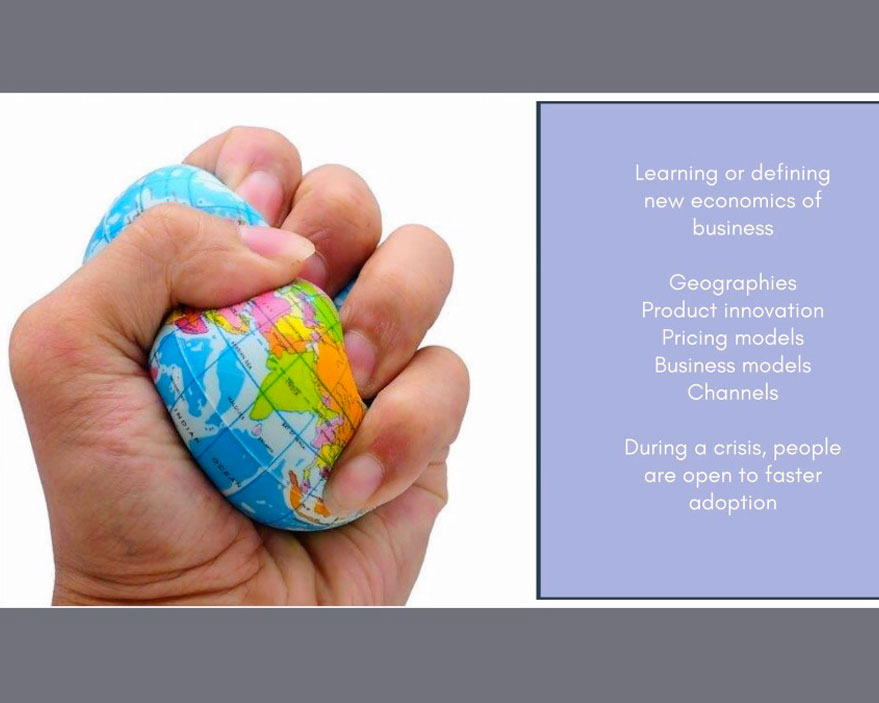
It is also a good time to sit and think: who are your energy givers and how do we take them forward? Innovation is going to be important. We have heard the term frugal innovation which is jugaad. There is no better time than this where you take one step at a time and do it. We have to look at the new economics of the business in which we operate, or the entire business environment in which you are operating, the geographies are going to change, product innovation is going to be very important, pricing is going to be so important because it is not about ‘on what basis are we going to sell our products’. Models are going to be changed and channel partners are going to be changed.
Communication has become so important because you are communicating with people you are not seeing or meeting. Communication needs to have an agenda, but it should be unscripted, people should feel that you have come there to give them an honest assessment of the situation. They should be able to respond to you because there is no worse time than this, the leader needs to be available 24/7 because this is a crisis.
The industries which are depreciating industries: travel, restaurant, etc, these are depreciating industries in the sense that once you do not sell a hotel room or airline ticket, it is gone. They will have to find a completely new way of doing business. Every adversity has an opportunity. We must get rid of our rigid way of thinking and reinvent ourselves. This is an opportunity to clean up. The other is de-averaging your portfolio by breaking it down, having different strategies and priorities, new emerging growth pillars, how do you take advantage of them and move forward on those. The most important of this is adopting a new way of working.
Healthcare is going to be a big opportunity.
Can we leverage some of our new bank opportunities? Reduced travel, work life balance, listening to our customers, shifting patterns… do we understand our customers, and use things like machine learning and artificial intelligence in the real sense of the word. This is going to be survival of the fittest where everything is going to be automated or a lot of things are going to be automated. Quick learning, quick action and quick decision making. Agility will be the key today.
There will be new industries and one will have to smell those opportunities. Like packaging, telemedicine, etc. Cyber security is a big area of concern because IT systems have never been opened as much as today. So, fraud and hacking are on the list. Cyber security is important. The last is transformation: I am sure all of you are already on a transformation journey. You will need to reset your transformation journey agenda. What is your long term versus short term, because short term has to be met. There are going to be new trading partners. Everything is going to be done digitally so digital platforms, internet usage are going to be important.
ROTARIANS ASK
Can the government think like an entrepreneur?
There is a lot of guidance being given to the government, hopefully they will respond. They need to respond faster but we will have to wait and watch how they respond to some of them.
Can anything become more powerful than Facebook, Google, Zoom?
Before Covid-19, China introduced cryptocurrency backed by the Central Bank of China. That was going to be the new norm because China saw that everyone would move to an e-platform and if you had cryptocurrency backed by the Central Bank, that could become the main currency. This would have a huge impact on the dollar. China is ready and I heard that a few other countries have also been working on that. Anything related to technology is going to help. But we need to get our cybersecurity right.
What will be the impact on the luxury industry?
The luxury industry will not be much impacted because it is dealing with a small section of people. But, because consumerism is hit, the mindset that what do I do with five watches, or similar luxury items, may be there but it will be with just two or three per cent of people impacted.
An article said that when Emirates airlines resumes, they will take a blood test of the passenger before letting them board. Do you think this may be replicated in other industries?
They are saying that they will get the reports in 10 minutes, and you will be able to know if you are good to fly. It is going to be valid for some period of time so you don’t need get a blood test every time you fly. But, security may not want to touch your I-card… So flying is not going to be a great experience.