

President’s Message
WHEN THE SAINTS GO MARCHING IN
You either love jazz or hate it! You simply cannot be a bystander unless you are tone-deaf.
For the musical mathematician in you, the syncopatic swing beat can drive you delirious and make you want to jump with joy or like it made my friend in the US ask: “why do these musicians play different notes instead of playing cohesively and in unison.”
Years ago, in the early 80s, I was sitting at the Jazz Yatra at Rang Bhavan and my neighbour in the next seat turned to me (after a Polish band had finished playing a number)and said, “I say, when will the band stop tuning instruments and start playing seriously?” So, it is clear from the above that jazz is simply not for everybody !
You have to be a musician to really understand jazz, especially when you are jamming with likeminded musicians and find out how different instruments arrive at a junction to make a glorious soul stirring sound.
A few genres of jazz like Fusion and Avantgarde are only for a handful of dedicated jazz lovers. In fact, these are the genres that have put off many first-time listeners. My sincere plea to DJs all over is to initiate curious listeners to Swing, Dixieland and Blues which make them tap their feet and bring them to the dance floor.
This was the tone and tenor when I was growing up with the Big Bandstand sounds and dance halls of the ’60s and ’70s.
Jazz was not born overnight. It was born in the form of the Blues in the Black shanties of New Orleans in the late 1800s , it was the lament of the cotton pickers and the rhythmic chants of the jailbirds and slave gangs breaking stones in the quarries. This was really the birth of the Blues.
No one knows when the Blues were born, the Clarinetist Louis Nelson says: “There ain’t no first blues – The Blues always been”. Hunger, empty pockets, a mean boss, a cheating spouse or some such misery – very much a part of life in those days helped the blues roll along. Sydney Bechet, one of the pioneers, put it best when he said: “In the Baptist church, people clapped their hands and that was the rhythm.” The Black spirituals and the Blues were one prayer. One was praying to God – the other was praying to what’s human. It was like one was saying – ‘Oh God let me go’ and the other was saying –‘Oh Mister let me be me.’
This inadvertent musical expression of the African American man in the deep south was where the jazz seed was sown. We can safely say that Ragtime, Gospel and The Blues were the genres from which jazz was born.
Jazz is a style and not a composition. Any kind of music may be played in the style of jazz.
 Jelly Roll Morton did just that and helped popularize the genre by styling his own compositions to marching band tunes of Souza and’ popular Italian, French and Spanish songs of the era.
Other legends of jazz who were the pioneers were Joe King Oliver, W. C. Handy, Sydney Bechet, Blind Lemon Jefferson, Robert Johnson, and Buddy Bolden. It can be said, with certainty, that without these giants there would be no jazz!
These pioneers were the pantheon of Gods on the Altar of which later giants like Armstrong, Ellington, Basie, and Goodman would pray. So much of their early work has sadly gone with them to their graves! Jelly Roll Morton changed all that when he started writing down the score. This helped the music move from inner cities to major towns in Louisiana and Mississippi where it took on regional chartbusters and gave us numbers like The St Louis Blues, The Memphis Blues, The Louisiana Blues and Basin St Blues.
Then came musicians like John Lee Hooker and Muddy Waters who were the first to electrify the Blues and add piano and percussion.
So now we clearly know that neither Blues nor Jazz had a single creator, it all began as a pot of giant gumbo stirred and seasoned by hundreds of hands!
Little Black bands were playing all over the south and this naturally attracted some serious white musical talent and music helps cement serious racial tension as between musicians there was no Black or White simply The Blues! A lot of these white musicians were shunned by their own folk for selling themselves out to the Devil’s music. It did not matter to these small band of white musicians and they were attracted to this sound like moths to the light – they were sold to this new art form.
A man born on Perdido St. in New Orleans purchased a battered second-hand Cornet by borrowing 5 dollars and paying back the sum of 7 cents a week from his earnings. His soulful sound was coming to the notice of some band players and soon he was stealing the show.
This was the great Louis Armstrong. His rise was not meteoric, like all Black musicians of the day he played in marching bands and trios and one day came to the notice of the legendary Sydney Bechet while playing solo on the famous tune ‘High Society’ and the rest is history!
The other giant Edward Kennedy Ellington or popularly known later as the ‘Duke’ was making his way by washing dishes at the Plaza Hotel in Asbury park in New Jersey. He started on the piano and swiftly made his way up. The novelist and music critic would write about him years later: “At its best, an Ellington performance sounds as if it knows the truth about all the other music in the world and is looking for something better. Not even the Constitution represents a more universally American statement and achievement than that.”
In his own words, Ellington recalls what he called ‘A Negro feeling put to rhythm and tune for the whole country.’
Bands were now moving from New Orleans and Mississippi area to the rest of the south and even to areas as far as Chicago and New York and slowly becoming an all-American phenomenon. It wasn’t easy, all-white bands refused to play on the same stage where Blacks had played and people walked out of cafes and dancehalls, but slowly word began to spread from the few who stayed back and had ‘a good time’ and then the crowds returned. Jazz had arrived.
On March 7th, 1920, the Original Dixieland Jazz Band cut the record Livery Stable Blues and that sold a million copies at 7 cents apiece. It sold more than any single record sold by Caruso or Souza. This was followed up by more recordings of The Jazz Band Ball, Fidgety Feet, Sensation Rag, Tiger Rag and the Clarinet Marmalade Blues.
This giddy sound would soon move across the pond to London and even the average Brit did not understand the American Negro but they were stomping their feet and shaking their leg and were surprised to see a plethora of white musicians sprinkled in the bands that came out to play.
One moment Jazz was unknown, the next it had a become a serious pastime of a hundred million people!
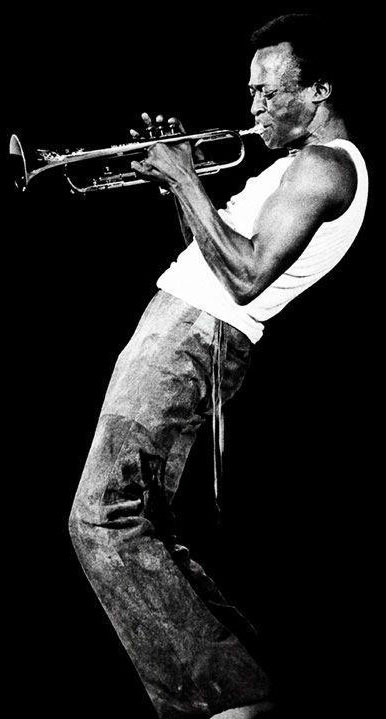
The story of Jazz is long to write or talk about and I would recommend for the afficionado to read thousands of books that have been written about these legendary names like Louis Armstrong, Duke Ellington, Count Basie, Glenn Miller, Bix Beiderbecke, Art Blakey, Thelonious Monk, Dave Brubeck, Dizzy Gillespie, Johnny Hodges, Lionel Hampton, Oscar Peterson, Miles Davies, Stan Getz, Charlie Parker, and The Legendary singers Ella Fitzgerald and Billie Holliday.
Today, Wynton Marsalis who is the Director of the Lincoln Center for Jazz in New York City is flying the flag high. He has followed the pioneering giants of the early and middle 20th century and moves jazz to the millions who listen to this all-American music .
Jazz, of course, is now played all over the world and that is the legacy of the Second World War when American GIs left this artform in Europe and Japan. India has been no exception. Louis Armstrong came here in the early ’60s and other great musicians have played at the Jazz Yatra and continue to do so even today, but alas it is to a very small audience!
People in their ’60s and ’70s will recall the many bands playing at the Taj Mahal hotel and in restaurants all around the Churchgate area. Musicians like Louis Banks and bands Like Chic Chocolate and many others have kept the jazz flag flying in India.
I would like to recommend a serious book ‘Jazz – A History of American Music’ by the prolific Ken Burns. It is a comprehensive compendium written about America’s greatest export to the world. I will end with a quote from one of my favourite comedians Billy Crystal who summed it up best when he said: “The thing about jazz is, it’s free flowing and comes from the soul.”
Framroze Mehta
President