
President’s Message
Fellow Rotarians,
Very Warm Greetings!
Historically, business models have been quite standard with certain key factors and then had some variations on a case-to-case basis.
In the early twentieth century, the ‘bait and hook’ or the ‘tied products’ model was popular, where the basic product is sold at a very cheap price in order to make profit by selling complementary products / refills for a high price or simply increase sales of the profitable complementary product.
In the 1950s, came the ‘franchise models’ led by McDonald’s followed by ‘hypermarkets’ like Walmart in the 1960s.
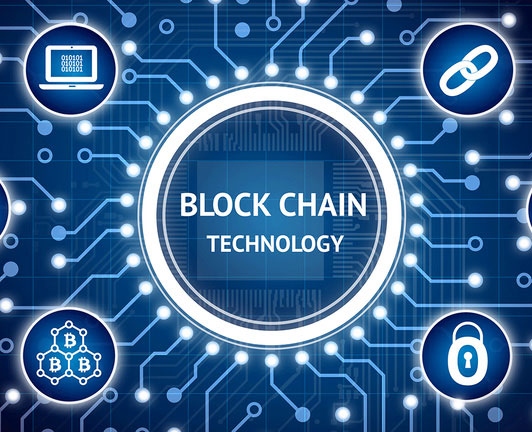
With the arrival of the internet, business model reinvention entered a period of radical growth resulting in new platforms like bitcoin, block chain and crowdfunding bringing, about a sea change in financial models and capital raising avenues.
In the last few years we have witnessed several emerging models, which are expected to redefine business over the next few decades. Each is a revolutionary new way of creating value and is a force for acceleration. Here are a few:
The Crowd Economy-Crowdsourcing, crowdfunding, Initial Coin Offerings, leveraged assets, and staff-on-demand leverage billions of people online e.g. Airbnb has become the largest ‘hotel chain’ in the world, yet it doesn’t own a single hotel room. Instead, it rents out the assets of the crowd, with more than 6 million rooms, flats, and houses in over 80,000 cities across the globe.
The Free/Data Economy which is akin to the ‘bait and hook’ model, essentially baiting the customer with free access to a service and then earning from the data gathered about that customer e.g. Facebook, Google and Twitter.
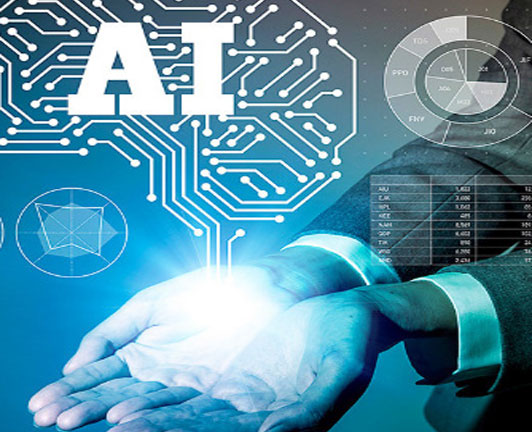
In the late nineteenth century, a good idea for a new business meant improvising upon an existing tool e.g. creating a power drill or a washing machine from a drill or washboard by using electricity. However, now AI will be the electricity of the 2020s – a layer of smartness added to any existing tool e.g. cars become autonomous vehicles.
At the convergence of block chain and AI we find a radically new kind of company, one with no employees, no bosses and nonstop production. A set of preprogrammed rules determines how the company operates and computers do the rest.
While we have been witnessing the development of these new business models, in a world that could be known as “After-Covid-2019”, we will see technology playing a more enhanced role than what was envisaged earlier and that will shape and reshape business conduct and consumer behaviour. The underlying theme of the technological transformation including ‘digital’ with all its variations and innovations will revolve around creating business models that will survive in a ‘less-contact’ society.
Consequent to the forced physical/social-distancing norms, business continuity is enabled by technology e.g. e-meetings. E-commerce ensures that critical supplies are transported from source to destination while digital payments ensure that money (and the virus) doesn’t exchange hands.
The way restaurants and hotels did business is already impacted adversely and so is travel business and transportation. Cook-at-home meal-kits are getting more popular with those who belong to the “do-it-yourself” type. While doctors are conducting Out Patient Departments through tele-medicine platforms, teachers’ online classes are gaining momentum.
It is said that technologies that will enable ‘less-contact’ would be able to address consumer needs in the ‘new world’.
Automation, which has so far been resisted by policy makers, is going to find wide acceptance and increased investments. It is also predicted that automation in various sectors such as warehousing through robotics, drone-delivery and service systems remote 3D printing and additive manufacturing are going the ones to watch out for on the fast track.
May be it is hoped that with the adoption of these and other modern technologies, in the event of another pandemic, life and business will not become so disrupted.
As the world advances digitally and electronically, data protection, data privacy, cyber-security, hacking vulnerabilities will require serious consideration and remedies. However, nothing can ever be fool proof. Nations will want the data servers, hubs and centres located within their borders, but still sufficiently isolated.
This also throws up several interesting perspectives and issues on physical and psychological aspects for the human species, who by nature are social animals and thrive on physical contact and in herds. Today, forced physical distancing due to fear of Covid-19 has brought about isolation and great fear. But can this continue? Which would mean that human species has undergone a great change. There have been global pandemics in the past in recorded
history, but will the effect of this one be difference due to technology advances in the way we do business and our lives.
Who would have, four months ago, thought that Rotary meetings and activities would be conducted without physical presence, and more so, our Shukriya Night and Installation?
So business as usual is now business unusual.
I have enjoyed writing these columns each week, and have tried to cover diverse topics of interest, and hope you enjoyed reading these. This is my last column as President. In the next issue, I would be submitting my report on our Club’s projects and achievements.
Preeti Mehta
President