The Best Of The Next
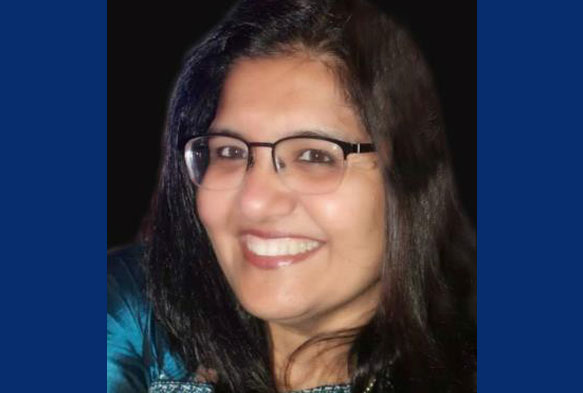
PADMAJA RUPAREL, co-founder, Indian Angel Network, talks start-ups, disruption and how to harness their energy to drive India’s growth
What have start-up and innovation done for this country? First, let’s look at what India was before colonization: it contributed to 25 per cent of the world’s GDP in the 1700s, almost the same as China at that time. Subsequent license permit quota raj and colonization brought us to our knees.
Post-Independence and post-liberalization, after July 1991, we saw the old DNA resurface with a vengeance; well-established business groups turned entrepreneurial. The Tatas and Birlas started restructuring themselves and became aggressive in overseas acquisition. While the IT industry, which was largely a first-generation industry grew from about US$60 million to now touching almost US$200 billion in a period of 30 years, contributes to 80 per cent of the profit for the Tata group through TCS. First-generation entrepreneurship, knowledge industry and innovation Mehtacreated value and are continuing to create valuations and values.
The first wave of first-generation entrepreneurs like Mr. Narayan Murthy with Infosys and people like Mr. Sourabh Srivastava who have been co-founders of Nasscom (the software industry association), this virus of entrepreneurship has now infected areas across healthcare, edutech and manufacturing. We all invested in what were traditional focus- and sector-areas to bring innovation to more flows to create a different way of doing things, to bring a difference of how customers can view and how their pain points are solved. Our world is evolving. Innovation has become the game changer.
In the Covid world, we’ve invested in a couple of companies who are manufacturing a retro-fitable device that can be fixed to generators to reduce up to 90 per cent pollution from the smoke that is spewed out. Post-lockdown, they created a UV device for reuse of N95 masks and PPEs. Not only was the product created in five weeks, we fast tracked and applied to the FDA for approval last night.
Innovation and startup have brought the knowledge industry together but are telling us that it is no longer a game of what sector and domain expertise can do alone; it is a leveraging of those competencies and skills that can change the game. That game changer can happen particularly with start-ups because they are quick, disruptive and capital-efficient. Entrepreneurship is here to stay and it is going to change the world. From 1991, India itself has moved to the fastest-growing start-up nation.
Some statistics on that note: GDP was at US$2.7 billion and we grew it to US$2.9 trillion. We could have done better, for sure. Imports have grown from US$24 billion to over US$550 billion.
Foreign reserves grew almost dramatically otherwise we were almost a banana country.
Even after this growth, we have not achieved it. We are sitting at the cusp where if we get our game right, if we get our start-ups to work faster, they are going to meet the innovation and the differentiator for our country. The only way for us is up.
So, what will make this happen? There is a strong individual talent base sitting in this country with very favourable demographics. The average age of an entrepreneur is 35 years. This is much lower than the US which is considered the country of entrepreneurship.
Up until Covid, we were the number one film producers globally and number three in the television market globally. We are the most attractive emerging retail market. Steel capacity: we are growing at 25 per cent more than Japan and the US. Transportation: number one in motorcycles, number two in small cars, number two in growth of the automobile market, number one in tractor manufacturing. Education: we are close to 900 universities and over 53,000 schools. This is the potential of this market. The government is focused on start-ups and innovation for a single reason it is the job creator. US history over a period of 50 years shows that the over 80 per cent new jobs were created by companies with less than 50 employees and there was a negative job growth in large companies. This is from a report from the respected Coffman Institute.
Digital growth is driving India. We have the fastest-growing mobile market, 1.2 billion mobile phones of which 500 million were smartphones before Covid. Two weeks ago, they said that has grown to 600 million smartphones. We are slated to reach 850 million by 2022 – we are going to beat that. We have the largest internet user base. We have the highest mobile penetration of the internet, with 60 per cent active on social media. Online retail has crossed US$120 billion by 2020 alone. What has optimized and empowered this is Aadhaar which is the open digital biometric identity, a paperless economy which is e-signs, digilocks, E-KYC and the payment layers which are UPI, IMPS; the country commercial transactional layer which is the GST and the open privacy consenting network. This means that the way we live, conduct our business, our personal life, have all changed. It’s been highlighted by the lockdown but this change has been happening.
Before Covid, KYC applications that took four hours were reduced to two minutes. Retail customers onboarding moved from six days to one hour. Digitization has been driving the nation to the next level. The opportunities are humongous and hugely different. This is fertile ground for innovation and start-ups.
Another company of ours which was into robotic waterless cleaners for solar panels were locked up. They turned around and in six weeks created a ventilator for Covid-19 issues which has been already blessed by the principal scientific advisor. We are product-ready and creating the first 300 products with a large public sector-listed unit. They are already contracting with the government. Again, ladies and gentlemen, just seven weeks.
We are the third-largest start-up ecosystem in the world, fastest-growing,
we have grown almost 300 per cent in the last six years. From 26,000 startups two years ago, we have crossed the 60,000 mark in FY’20. We have a value creation of over US$100 million.
The angels, individuals and family offices and people who build businesses bring in not only the money but also the mentoring and operational guidance and actually nurture these start-ups.
The reason these companies could pivot is because of the entrepreneurs but also a taskforce of professionals, manufacturing people, electronic leaders, founders of HCL, people who built the med-tech industries, FDA guys, the government, ICMR. This is bringing together the ecosystem to channelize these young start-ups and entrepreneurs to create value.
If they had not done this, the companies would have been dead as also the investment. It almost came to a point of pivot or perish but these guys can’t pivot on their own, they would have perished with the idea. It is when you bring huge investment of funds, mindspace and networks that makes it happen. And then why, how, will these angel investors exit? And is there a potential for their investment to garner next round investments. Today, unlike five years ago, the next round investment is growing rapidly. As many of you know, there is a government fund for startups which is a Rs 10000 crore fund. Remember, it is only about 15 per cent of the entire corpus that the fund manager raises. Eighty-five per cent has to come from other sources. So Rs 10,000 crore is a catalytic fund/amount. About a hundred thousand crore has to be raised. We have 550 funds vs about 42 that were there five years ago. These have already invested about US$35 billion in the last two years.
The angels are first-round investors who put in approximately Rs 2-3 crore. After the half million is gone, VCs come in with the next US$3-4 million and take the company to the next level and then there are the growth stage companies which put in US$30-40 million. That is the value chain. Start-ups must be nurtured; with the half million, they start with a prototype, a functional product, get their early revenues.
It is imperative for the angel investors who put in the money to understand that it is a high-risk game. Is there a next round investor? What I am trying to share is there are next round investors and the country has changed that way. I worked with first-generation entrepreneurs about 20 years ago but there was no VC money at that time. India has changed. There is rise in domestic and foreign capital.
IAN has not only the funded funds but also the department of biotech, state governments, State Bank of India, corporates from India and overseas like Hyundai, foundations, family offices and individuals. The flurry of investments have increased dramatically. Investing in startups either directly or through funds is now an asset class in HNI portfolio. It is providing a kicker for the HNI portfolio because many of the other asset classes like fixed deposits are not giving the returns that they were. It is necessary for the HNI to start looking for the kickers, and this is one of the causes which is high-risk and high-reward.
India already has about 30+ unicorns from Flipkart to Byju’s to Udaan. We have created companies like Dhruva which was one of our investing companies. Incidentally, we invested a million-dollar valuation about nine years ago and it is now looking at a listing at about a billion dollars. So that is the kind of trajectory that it had.
There are two broad categories or philosophies of investment: some look at how much of the market share they can get and keep raising. And we have some overseas companies who have been doing the same. The other perspective is look at the top line but also the bottom line. There the verbage is on the bottom line, unit economics, customer acquisition cost, capital efficiency these are the kinds of things that drive the second category of investors. We fall into the second. Over a period of time that has given us interesting returns. For instance, if somebody had invested in every single company that IAN brought to the table, they would have got 38-40% IRR. Only 15 to 18 per cent of our companies have failed which is globally very different. The average is usually 30-40 per cent so we beat that.
While early stage investing, especially angel investing is driven by risk and reward strategy, it is important to us that that strategy has to be driven by risk mitigation strategy because the number of risks that a start-up faces in its life is huge. The strategy of success is not only to say what is the upside, but how do we contain the downside. Clearly, in 2025 the projection for the start-up industry is 100,000 startups to employ about 3.25 mn people direct in jobs. It is hard to calculate indirect jobs. About US$500 billion market value, we will be number two after the US in terms of value of start-ups created. We will also be looking at engaging completely with corporates as well as Indian businesses because we can see a huge outreach to us for Indian businesses to say how can we innovate, how can we engage with startups, how can we get talent in our space and those are interesting conversations because that is telling that they are looking at the capital efficiency of the startups, the nimbleness of startups, the disruptive thinking of startups, high quality talents that the founders represent, their ability to be bold and break the framework and get things done. This is the power of start-ups.
We, as IAN, are 475 investors from 12 countries. We believe that funding is the base level, we want people to mentor, engage and leverage their networks that will make companies scale and exit. We are at the centre of the ecosystem. You name the VC fund, name the corporate who are active in quality, they have invested others with us or behind us, so we have the Paytm, Tiger, Infoedge, etc. We have strong focus on governance, transparency, integrity, and fiduciary.
We have created global platforms for angels to invest. We have created the Indian Angel Network to become not only geography agnostic but also geography leveraged. That is how Dhruva, while we invested 100,000 for a million dollars, we carried 10 per cent, yes, but we could open up NASA as one of the early customers which opened up for this unmarried sardar to take the company, get his visa and take the company in the valley and partner with the top global Fortune 500 companies and move towards becoming a Unicorn.
Typically, an Angel investment around is Rs 3 crore, the model is really every angel investor decides which companies to invest in or not. A group of angels come together to fund a company but each one invests Rs 5-10 lakh so our average investment has been Rs 8 lakh across the 160+ companies we have invested in. We get about 10-11,000 applications from entrepreneurs and have a multi-tier filtering and shortlisting process. We develop research and expertise from domain experts as well as in-house research. We have diversified across sectors, tried to converge sectors. Today, we are looking at the convergence of cyber security and health tech, it’s becoming interesting and that has given us the kind of IRR I spoke about.
We try to make IAN a professional institution which leverages sector, experience, geography, location, connects to corporates, expertise. We have launched the IAN funds so that companies can quickly raise the next round. And, we are investing with the angels behind the angels, building up a co-investment platform and we have managed to bring in the best breed of industry leaders.
From 10,000 applications every year, how much do you sieve it down to?
My team brings it down 3000 because we get a lot of muck. We deep dive into these 3000 – a multi-layer deep diving and bring in domain experts to understand the space. I am not investing in the best of the best, I am investing in the best of the next, so I need to know what is happening where in the world. Domain expertise becomes important. Number two is the business model itself and number three that is 70 per cent is on the promoters, do the promoters think scale? Can they lead? And so on. We do different types and models of assessment and bring it down to 250. 250 then go through a grilling where I or my partners will sit and do a deeper grilling. Now that the team has scaled up, we are actually declining less because it is also an endorsement of the team and it is our scale-up in some ways, so between 180-200 is what actually is presented in IAN pit sessions every single week. There will be three-four entrepreneurs presenting and you can still have another layer of thinking and get about 30 to get invested. So out of 10,000 to 30, and out of 30 you probably see five or six taking our statistics into play. It takes about 60 days, we are trying to make it 40.