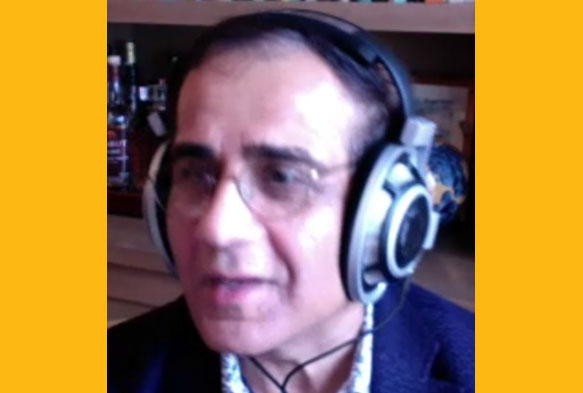
Rishad Tobaccowala, Senior Advisor, Publicis Groupe, Talks About Remaining Relevant In Changing Times
I WILL TALK ABOUT THREE TRENDS THAT ARE CHANGING THE WORLD, THEN THREE CHALLENGES THAT MOST BUSINESS SOCIETIES FACE AND THREE WAYS TO ADDRESS THE CHALLENGES.
Like many of you, I was forced to read and memorize Shakespeare since I grew up in India and I discovered that in
addition to Shakespeare knowing a lot about humans and understanding people better than most people did, he was also an amazing business strategist. In a scene, he writes: ‘take the current when it serves, or be prepared to lose thy
endeavours’ which means ‘go with the flow’. So, if you are not aligned with a trend, it is likely that you will
eventually lose. There are three unstoppable trends in the world.
The first, is a little shocking: globalization. You might say, what is he talking about? India wants to be nationalist, Trump is building borders, China is not letting the internet in, but my belief is, that in the last 25 years, two billion people have come out of poverty because of globalization.
The globalization that is changing is a Westerndriven globalization is being replaced by a multi-polar globalization, but it is still globalization.
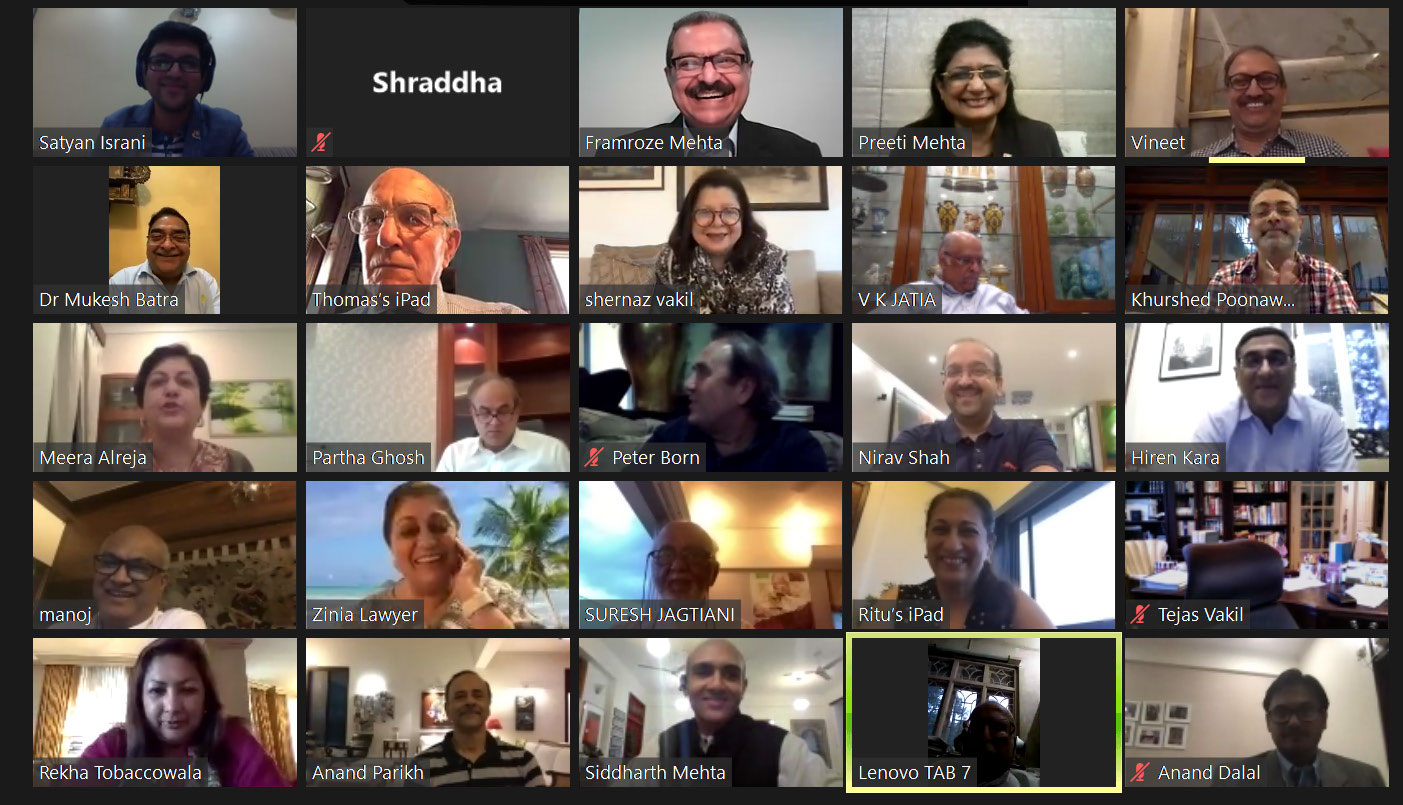
Globalization is now, not necessarily America-centric or UK-centric or Frenchcentric, but more multicountry centric. One way to illustrate it is this particular zoom call. We have people from San Diego, Texas, Chicago, Scotland and most of us are at our homes because we happen to have a virus. The virus started in China but spread globally. You can’t create a wall against it, you can’t tweet against it, it is global.
Some of the biggest challenges of the world, whether it is the internet or climate change, are global. So the reality is that without globalization nothing happens. The rise of nationalism is more a failure of our current system in understanding the world as being global rather than agreeing to start globalization. I always advise people to be aligned to globalization.
The second, demographic shifts. One of my basic beliefs is that when globalization is done better, the future will be run by the CIA – China, India, America. So, when I was writing strategy for our company, my strategy always said how does it work in China-India-America. Even though our third-largest employee is from the UK and the company is head-quartered in France, it doesn’t matter. It is China-India-America and, as a result, for the Publicis Groupe, our second-largest employees – 15,000 out of 80,000 – are from India. When I started, it was 500, most people don’t realise that the largest number of employees in the world including the USA for IBF, Accenture happen to be in India. So, it is pretty remarkable. The other one in 2028, the Chinese economy will be the biggest economy in the world and I am not talking about purchasing power parody, in absolutely numbers. China and India combined have 37 per cent of the world’s population so, in effect, China, India, America are a big thing and now look at the demographics.
Every day in the US, 10,000 people turn 65; for the first time America is older, 75 per cent of the wealth in America is with 50 years and older. So, you see young people, very good-looking people in American advertising but they don’t have any money.
It is quite interesting that today, if you think of how votes get collected, it is actually more for the older people and in fact in the US there is an issue now. The younger people are saying what has happened to us, we can’t afford the mortgages, will social security be around etc. The second big change in Unites States is that next year, the US will have a Caucasian minority. People are of colour will be more than people who are white. So that is demographic shift.
I used to travel to China a lot, unfortunately I have been to more cities of China than India. I have been to 24 cities in China and maybe less than 20 in India. But I have been to 24 cities in China and people would say India and China are same. I would say they are similar for two reasons, each of them have a billion people and maybe you can say that they are the largest-growing economies in the world if you can believe the numbers.
The biggest difference outside of whether one is democracy and one is not is age! The average age in India is closer to 20 years, the average age in China is closer to 40 because of one single thing – the one-child policy. What we thought of as a population problem is now called the demographic dividend.
What China thought was getting the population under control has now become an existential crisis for them and their growth. And if you walk around India, you will see children everywhere. If you go around China, you will not see any children. It is pretty remarkable how that one thing changes how the country works. And the other thing that is the centre of these countries, AIC. In the US the focus is on the individual which is how the individual will be happy. In India that focus tends to be on the family, which is what are the implications of the family. In India, literally the family goes to buy cars, interviews the person. In China the focus is on the country, what is good for China.
So these are some remarkable features of India and China and if don’t understand these demographic shifts, you can’t understand what is going on in these countries. But because they are these massive demographic shifts, older and younger, aging and Caucasian, you see political upheavals everywhere.
The third is, technology. We are in the third era of technological change, the internet really changed things. The first era began in 1995 when we used to connect to transact and connect to discover. In 2007 we entered in the second connective age, here we are not only connecting to transact and connecting to discover but because of mobile force you are connected to time, social media and everybody.
So, think about in India, WhatsApp, Facebook, Apple, Samsung. Now we are entering in the third connected age, it is built on each other so one doesn’t replace the other. The third one is where we are simply connected to data to data. New age of connecting voice, Alexa and so on, much faster ways of connecting which is 5G, I am connected to this massive computer in the sky which is cloud computing and that in one way besides the phone company is also Microsoft which is among the five most valuable companies in the western world.
So, technology is really about human connection. Connect to transact, connect to discover, connect to all the time, connect to everybody. So, under technology, there is humanity and these technologies are so powerful that they actually decide elections. In many ways, the US 2016 elections were decided on Facebook because the Russians decided how to operate Facebook and other people decided how to suppress the vote. And that is why when globalization, demographic change and Technology, you have India and US deciding to ban Tik-tok.
So you are going to see more of these things, everyone is saying we have to grow, we have to grow in India, what is the best way to grow in India? Let’s tell Mukesh Ambani get rid of all of his Jet, let’s invest in Jio. So those are the things that you must understand. The Jio platform is many ways the single biggest descriptor of when technology, demographic shifts and globalization comes together. And what you are basically seeing is this remarkable work whether it is biggest investor, for instance, out of the 20 core and core unicorns, their major investors are Chinese. So you can just sort of imagine the various interesting things that are going to go on between India, China and US. So those are big shifts and those are going to continue at a rapid space.
As a result of which all our business and individual companies are basically struggling three big challenges. First, is change! A lot of people will tell you that change is good but the underlying basic belief is that change sucks! As Anand said, I have worked for the same company for 20 years and now I am no longer an employee or the director but I continue to be an advisor and I run a lot of training programmes etc, but I have worked for the same company, I have lived in same city for 40 years.
I met my wife when I was 12, 49 years ago. So you are looking at somebody who has actually changed because when somebody comes to me and says change is good, I say I am happy, why don’t you change, if you think it is so good. Change is something that people come and tell you to do it, if you have a great bottle of wine, they will say let’s share it, they won’t say you drink it. With change it is like it is very good, but you do it!
Changing is like being educated, like riding bike. You fall off in the beginning, you look silly, but with practice more successful you get. Now when most of you are running companies, schools, retired and in senior management, the whole point is why would you want to look silly at this stage? Why do you want to learn new things? So what you do is instead you make up words like data, personalization, platform, disruption without actually knowing what is going on. But while change does suck, irrelevance is even worst.
The reason I eventually had to change is because if you don’t change, you become irrelevant. But unless we understand that change is difficult, it is very hard to get ourselves to change, people to change and companies to change. For that to happen, you require three things.
First, you should learn to communicate with someone while change is good for them not just for the company because if it only good for the company, or only good for the individual of only good for the university, the people will say that yes yes it is interesting but why should I change if it is not for me. Second, it centralized me to change, most company say change but they keep the same old people who do the same old things to be in-charge, they give the same old bonuses to people who run the existing current businesses. People understand that, they go to new companies, new start-ups, they are like why should I take the risk and if something goes wrong I get fired while these people are still doing the established work. Third, training. You can’t expect the people to change unless you teach them certain skill sets. Many companies in the western world have stopped investing in unit development and at the same time they want change. So one is Change, how do you manage that?
Second is, leadership. I do believe that all over the world we have a crisis of leadership. What we really see whether in Business, politics or Universities, there is crisis of leadership and if you even see with Covid-19, in the US, we have Universities who want to open now there is no reason for an University to be open because the reality is that if lots of people gather together, this thing spreads. So they said, no no we will figure out ways to separate people, separate class, we will have Lexi glass and all. Okay! I am not sure if you remember being young, I am sure you do. If you take a lot of men and women in their 20s and you put them in a campus, I don’t know what Lexi glass will separate them at night. And so the reality is every University open has to basically go back into online teaching. So this is basically what I mean that leadership is accepting and facing reality and understanding data and science. It is not about imagination. You cannot be an imaginary leader unless you are a writer or movie maker which is not every leader happens to be. So that is a big problem and to a great extent there are 5 characteristics of Leadership and these are,
capability- you can’t be a leader of doctors if you don’t know medicine;
integrity- people have to trust you;
empathy – you have to think of other people;
vulnerability – the leader to say that I do mistake and then [surround themselves with people who would help them serve that mistake [inaudible]?]
inspiration – because regardless of what we believe, people choose their leaders with hearts and not their minds and therefore you lead be example and storytelling.
These 5 characteristics of leaders, put them up against yourself, against your bosses, your ex-bosses, pass them on to your kids, against your politicians. If they don’t have at least 3 of these 5, you probably don’t have a good leader, you have a bully, as simple as that.
Finally it is culture, people are really worried of how to manage their culture because many of us, we have been away from getting with people for about 6 months. Nobody goes to work, I can go to a restaurant but not to a place of work, I will need a permission from my HR. so in effect what tends to happen, in all likelihood, it is going to be another 6 months unfortunately. And there are some companies in the US, Google and Facebook, and all who have basically said that you need not come to work till June next year. So a lot of people are struggling, in this how do we manage cultures? How do we manage people? How do we manage teams? How do we recognise all the people sitting at home? And one of the things that I say to people is that many of us are not working from home, we seem to be living at the office. It is like it is office with us all the time, there is less working at home, there is no separation. So how do we do that and for this there are three key areas of culture that we should be pressing on. Your good companies have good compensation, recognition and autonomy. The thing that you basically need to understand is that there is something else that you need to look at, this is what you need to talk to your teams about. How can they grow? That is one. Second is, connected to the colleagues. So when sometimes you do zoom call talk about life, have virtual beer, don’t talk about work because we have to talk of the human connection because that is extremely important and finally a lot of people are asking purpose and value questions. I don’t know in India but in the US a lot of people are starting to think why do they do the work they do and do they enjoy what they do? What is the life all about? Some people have died due to Covid, some have recovered so there is like a life existential crisis, that by the way is going across your companies. It is going on across your teams, across your institutions, and those are the things that we need to talk about.
So how do you deal with change, leadership and culture? You have to optimize three operating systems, the physical, mental and emotional operating systems. We think of upgrading systems as technology but what basically tends to happen, you have a physical operating system which is important but if it stops working, you get very sick or you die and the other two doesn’t matter. So physical operating system are important. The three key things are, move more that is exercise, eat moderately and sleep enough. People basically go through 500 diet books instead of just these three things. The mental operating system, what separates us from monkeys is not the stomach but our brain because when we invented fire, we basically spent less energy in digesting our food and went to our brains. So for the mental operating system, you need to spend at least one hour a day learning because the world is changing so fast, it can be a blog, book or talking to someone. Sometimes you can’t do it everyday then do 7 hours a week and if you say you don’t have enough time then I’d say spend less time on zoom, Netflix and WhatsApp. Second, try to do a new thing every day, go to a website, call someone that you wanted to for a long time, fall out of the normal that is when your mind builds. Lastly, build a case for the exact opposite of what you believe. So I have a very strong case of why the current President of the US is an amazing president. Now I don’t believe that but I have a strong case and the reason is that because 42% of America believes that, I can’t just say that 42% of Americans are stupid because they are not! Lastly the emotional operating system, if you actually think about it life is all about three key things – love, loss and learning. So when you think about it, first is loss, may be when you are young you lose in some games, later you may lose someone you love, then you might lose your health and eventually life. So that is a reality that you need to be aware of. The other is love, love for hobbies, parents, children, reading, passion, etc. Thirdly, learning because what makes us better every day is learning. A part of loss and love teaches you to learn but part of learning is how to deal with love and loss. So to figure out that is really important.
So, emotional operating system, mental operating system and physical operating system to help you change, lead and culture in the world of technology, demographic shifts and globalization.